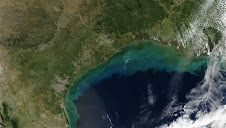
The United States faces two related problems, production of energy and water supplies. Most processes used for producing energy require large amounts of water. Pumping water from aquifers, treating water to remove contaminants, and moving water supplies from the source to the point of use requires energy. Some processes now promoted as environmentally sound such as ethanol production use a great deal of water. A recently introduced Senate bill addresses these issues.
H.R. 3598 gives the Secretary of Energy the authority to assess energy research, development, and demonstration projects of the Department of Energy to determine which ones should integrate water considerations. It would promote energy production technologies that would minimize freshwater withdrawal and consumption, increase water use efficiency, and increase use of nontraditional water sources. It would also take into account the effects of climate on water supply and examine the relationship between energy used to provide water supplies and the water required to produce energy.
The bill calls for interagency coordination to avoid duplication of efforts. It also requires that the Department of Energy consult and coordinate with nongovernmental entities such as research and academic institutions and industry that have expertise in energy and water issues.
28 March 2010

Environmental Responsibility for All Nations
Developing nations have an obligation to use natural resources wisely as they seek to increase their economic well-being. Although this may sound like a “do as I do, not as I say” approach considering the damage done to forests and other natural resources as the US and Europe grew into the industrial and economic powers they are today, we must consider the differences between the world two hundred years ago and now. At the start of the Industrial Revolution in the mid-1700s, the world population was about 700 million. Today it is over 6.8 billion. According to the United Nations, in 2008 over 5.5 billion people lived in less developed regions. By 2050, global population is projected to be 9.3 billion with 86% living in less developed countries. Clearly, the resources available are far less than they were in the 18th Century, but the population is exponentially greater.
In the climate debate, industrialized nations should expect developing nations to use the best available technology to reduce pollution emissions. In return, the developing nations should receive technological assistance from industrialized nations. It creates a win-win situation. Pollutants do not respect lines drawn on a map. Consequently, it is in the industrialized nations’ best interest to give this type of assistance. At the same time, the world must hold developing nations accountable for their run-away population growth. They must strongly promote family planning policies that are in line with available resources.
Equity is a slippery slope. By requiring developing countries to bear the responsibility for their people and their contributions to pollution, we create a potential economic inequity. They have fewer resources and far larger populations than industrialized nations, yet they are asked to shoulder the burden of their needs and contribution to global pollution. However, if they are not held accountable, we run the risk of them never becoming accountable. We also must ask if it is equitable to ask the people of industrialized nations to bear the burden of fixing the problems of developing nations, which have existed as long, or longer, than they have. Once again, Hardin’s argument that overpopulation is the causative factor in poverty and degradation of resources becomes relevant.
If a nation, developing or industrialized, is unwilling to participate in reasonable pollution mitigation efforts, other nations can exert pressure through market-based approaches. Nations willing to participate should be rewarded through favorable trade policies. If the economics of pollution extend to the economics of trade, both industrialized and developing nations will find it more desirable to take the responsible route. This makes participation voluntary, but creates penalties for not cooperating.
Developing nations should expect industrialized nations to support their efforts through technology exchange. Furthermore, industrialized nations cannot expect to use developing nations as a dumping ground for “undesirable” industries. They must have standards for companies originating within their borders that establish factories in developing nations. These companies’ foreign interests should be subject to the same regulatory standards their US or European counterparts must follow.
In the climate debate, industrialized nations should expect developing nations to use the best available technology to reduce pollution emissions. In return, the developing nations should receive technological assistance from industrialized nations. It creates a win-win situation. Pollutants do not respect lines drawn on a map. Consequently, it is in the industrialized nations’ best interest to give this type of assistance. At the same time, the world must hold developing nations accountable for their run-away population growth. They must strongly promote family planning policies that are in line with available resources.
Equity is a slippery slope. By requiring developing countries to bear the responsibility for their people and their contributions to pollution, we create a potential economic inequity. They have fewer resources and far larger populations than industrialized nations, yet they are asked to shoulder the burden of their needs and contribution to global pollution. However, if they are not held accountable, we run the risk of them never becoming accountable. We also must ask if it is equitable to ask the people of industrialized nations to bear the burden of fixing the problems of developing nations, which have existed as long, or longer, than they have. Once again, Hardin’s argument that overpopulation is the causative factor in poverty and degradation of resources becomes relevant.
If a nation, developing or industrialized, is unwilling to participate in reasonable pollution mitigation efforts, other nations can exert pressure through market-based approaches. Nations willing to participate should be rewarded through favorable trade policies. If the economics of pollution extend to the economics of trade, both industrialized and developing nations will find it more desirable to take the responsible route. This makes participation voluntary, but creates penalties for not cooperating.
Developing nations should expect industrialized nations to support their efforts through technology exchange. Furthermore, industrialized nations cannot expect to use developing nations as a dumping ground for “undesirable” industries. They must have standards for companies originating within their borders that establish factories in developing nations. These companies’ foreign interests should be subject to the same regulatory standards their US or European counterparts must follow.
14 March 2010
Environmental (In)Justice - The Legacy of Uranium Mining for the Navajo (Diné) People
http://articles.sfgate.com/2009-06-21/news/17210121_1_navajo-epa-navajo-nation-legacy-of-uranium-mining
From the 1940s to the 1980s, the US appetite for uranium, spurred by the Cold War, led to highly unregulated mining operations on the 27,000 square-mile reservation that is home to nearly 200,000 members of the Navajo tribe. Mining interests and government agencies failed to inform miners and their families of the dangers of exposure to uranium and they did not provide effective protections from these dangers. Children played in contaminated soil and many people used pieces of uranium ore and mill tailings to build their homes.
The US EPA and the Navajo EPA have now committed to assessing 500 structures - homes, sheds, and buildings - near abandoned mines and tailings dumps. They plan to tear down and remove contaminated structures and build new ones. During the demolition and rebuilding, families will stay in hotels at government expense. As of June 2009, the US EPA had "assessed 117 structures and demolished 27 of them. Thirteen have been or will be rebuilt, and the owners of the others received financial settlements."
Contaminated structures are only a small part of the unsavory legacy left by uranium mining. There are over 500 abandoned mines and countless tailing piles on the reservation, essentially accidents waiting to happen. Caps covering abandoned mining sites are deteriorating. Runoff from periodic heavy rains may carry contaminants toward homes. Drinking water supplies may become contaminated.
There is little data in the article to identify this as an environmental justice issue other than that it affects a minority group with few resources. According to the article, "These families, with the resources they have, they would not be able to put up a new home for themselves," said Lillie Lane, a spokeswoman for the Navajo Nation Environmental Protection Agency. This is something of an understatement. The US Census Bureau estimates that approximately 50% of Navajo people on the reservation live in poverty caused by an estimated 30% unemployment rate. These additional data show this to be an environmental justice case.
Potoski and Prakash put forth that both government and private interests have incentives to pursue their own self-interests. In this case, the government seemed to ignore the mining interests lack of proper safety precautions. The mining interests took advantage of the Navajos lack of understanding of the risks and willingness to work under dangerous conditions because of economic necessity. Konisky clearly points out that poor and minority communities bear a disproportionate share of environmental risks because of "differential government of enforcement of environmental laws and regulations." I doubt that uranium mining interests could have done this kind of health and environmental damage in a more affluent and informed locale.
From the 1940s to the 1980s, the US appetite for uranium, spurred by the Cold War, led to highly unregulated mining operations on the 27,000 square-mile reservation that is home to nearly 200,000 members of the Navajo tribe. Mining interests and government agencies failed to inform miners and their families of the dangers of exposure to uranium and they did not provide effective protections from these dangers. Children played in contaminated soil and many people used pieces of uranium ore and mill tailings to build their homes.
The US EPA and the Navajo EPA have now committed to assessing 500 structures - homes, sheds, and buildings - near abandoned mines and tailings dumps. They plan to tear down and remove contaminated structures and build new ones. During the demolition and rebuilding, families will stay in hotels at government expense. As of June 2009, the US EPA had "assessed 117 structures and demolished 27 of them. Thirteen have been or will be rebuilt, and the owners of the others received financial settlements."
Contaminated structures are only a small part of the unsavory legacy left by uranium mining. There are over 500 abandoned mines and countless tailing piles on the reservation, essentially accidents waiting to happen. Caps covering abandoned mining sites are deteriorating. Runoff from periodic heavy rains may carry contaminants toward homes. Drinking water supplies may become contaminated.
There is little data in the article to identify this as an environmental justice issue other than that it affects a minority group with few resources. According to the article, "These families, with the resources they have, they would not be able to put up a new home for themselves," said Lillie Lane, a spokeswoman for the Navajo Nation Environmental Protection Agency. This is something of an understatement. The US Census Bureau estimates that approximately 50% of Navajo people on the reservation live in poverty caused by an estimated 30% unemployment rate. These additional data show this to be an environmental justice case.
Potoski and Prakash put forth that both government and private interests have incentives to pursue their own self-interests. In this case, the government seemed to ignore the mining interests lack of proper safety precautions. The mining interests took advantage of the Navajos lack of understanding of the risks and willingness to work under dangerous conditions because of economic necessity. Konisky clearly points out that poor and minority communities bear a disproportionate share of environmental risks because of "differential government of enforcement of environmental laws and regulations." I doubt that uranium mining interests could have done this kind of health and environmental damage in a more affluent and informed locale.
Subscribe to:
Posts (Atom)