http://www.azcentral.com/news/articles/2010/04/23/20100423arizona-immigration-law-passed.html#ab=-&dh=www.azcentral.com&dr=http%3A%2F%2Fwww.drudgereport.com%2F&du=http%3A%2F%2Fwww.azcentral.com%2Fnews%2Farticles%2F2010%2F04%2F23%2F20100423arizona-immigration-law-passed.html&dt=Arizona%20governor%20signs%20immigration%20law;%20foes%20promise%20fight&inst=2&lng=en-us&pc=men&pub=azcentral&ssl=0&sid=4bd2883caeb1e327&srf=0.02&srp=0.2&srx=0&ver=152&xck=0&rev=75818&xd=1
Although it is not strictly an environmental issue, illegal immigration is a sustainability issue. Wheeler (pg. 83) discusses immigration as a "hot-button topic" that must be addressed in relation to population pressures which in turn affect economic, social, and environmental sustainability. The state of Arizona, as well as the other states that share a border with Mexico, face increasing pressures related to illegal immigration. Arizona has now taken action to stem the tide of illegal immigrants crossing the border and the resulting social, environmental, and economic problems accompanying the issue.
Opponents of this legislation view it as a means of discrimination. However, it is a vital part of reducing the damage caused by illegal immigrants. Vast areas of the border region suffer significant environmental impacts from the constant stream of illegal immigrants who leave mountains of trash and damage desert ecosystems. Drug running and human trafficking increase crime and violence not only along the border, but increasingly throughout the border states. Illegal immigrants with little education or job skills have low incomes and, consequently, do not pay significant amounts of taxes, if any. In fact, recent calculations by the IRS show that a family of four with an income of $55,000 would receive a refund of all of the federal income taxes they paid plus about $38 through various programs such as the Earned Income Credit and standard deductions. In addition, children born in the US to illegal immigrants qualify for services and direct support at taxpayer expense. Because immigrants tend to have more children, this increases the pressure on schools and services for low income residents.
Traditionally, immigration has been a federal issue. However, federal enforcement has fallen short leaving states to pay the social and economic costs of large numbers of poorly educated, non-English speaking illegal immigrants. These costs include education, medical care, social services, crime, and poverty. This legislation empowers local law enforcement agencies to ask for documentation of suspects' immigration status and make arrests of those who are here illegally. It also sets penalties including jail time and fines. Although this is a state law, it addresses the illegal immigration problem at a county and municipal level as well.
Because of the failures of the federal government to fully address the illegal immigration issue and all of its related problems, state governments are finding it necessary to act on behalf of their residents. Ideally, the federal government would take strong enough actions to close the border to illegal immigration and assist states with the impacts of illegal immigrants currently in the country.
The problems associated with enforcement of illegal immigration laws at the federal level include lack of political will and the sheer logistics of monitoring the US-Mexico border. In addition, pressure from the Mexican government can influence the federal government's attitude toward border enforcement. It is in the best interest of Mexico for the US to allow free movement of Mexican citizens across the border. When Mexican citizens travel to the US to work, they tend to send much of their income back to Mexico. They also reduce pressure on Mexico's economic resources when they receive medical care and education at US taxpayer expense.
Much of the economic and social pressures associated with illegal immigration is borne by state and local government. This creates a greater incentive for these levels of government to develop policies that reduce illegal immigration. I believe that a coordinated effort at the federal, state, and local level is essential to solving the illegal immigration problem. The federal government must stop illegal immigration at the border and work with Mexico to alleviate the circumstances that foster illegal immigration. State and local governments must develop policies that make immigrating illegally unpalatable for immigrants. In addition, all levels of government need to work together to develop immigration and guest worker programs that create opportunities for immigrants and temporary workers with needed skills to enter the US legally.
25 April 2010

10 April 2010
H.R. 3598 Energy and Water Research Integration Act
The Energy and Water Research Integration Act addresses the interrelatedness of water resources and energy resources. Increasing energy demands fueled by the American lifestyle place new demands on already strained water resources. This bill seeks to minimize freshwater use, increase water use efficiency, and promote use of non-traditional water sources in energy research, development, and demonstration programs conducted by the Department of Energy. It also requires consideration of the effects of climate change on water resources available for energy production. Finally, it requires examination of the relationship between the energy needed to obtain water and the water needed to produce energy.
The problems identified and solutions proposed in this bill have few conflicts with Cohen’s “Values” Framework. Energy and water supplies are essential components of our economic and personal well-being in the U.S. The problem presents ecological as well as human well-being trade-offs. If water resources are not used wisely, both the environment and humans suffer the consequences. If energy production is limited by lack of water resources, human well-being suffers. Both human and environmental issues must be confronted when addressing the problem and solutions presented in this bill.
Both water and energy are national priorities; therefore, this policy issue would have an important place on the policy agenda. The federal government, specifically the Secretary of Energy, has the primary responsibility for carrying out the mandates of this bill. However, numerous stakeholders will be involved in the implementation of the strategic plan. Other federal and state agencies, research and academic institutions, and industries that deal with water or energy are all included either through participation in the Energy-Water Architecture Council or through annual regional technical workshops.
Other political issues that cluster with the water-energy relationships addressed in this bill include coal mining, oil and gas production, alternative fuels, hydropower and water storage, and climate change. The entities that produce energy or fuels or related technologies will be affected by the increased scrutiny of their efficiency and impacts on water resources. The less efficient methods of energy or fuel production will eventually lose to the more efficient, less water-intensive ones.
The causes and effects of the problems associated with the energy-water nexus are well known. Some methods of energy or fuel production use vast quantities of fresh water and many contaminate the water used. Extracting groundwater or moving surface water from source to point of use requires large amounts of energy. The greatest uncertainty is the amount of water required for various energy and fuel production technologies. The Strategic Plan calls for identification of the most water and energy intensive projects and those projects with the most potential for conservation. Clearly, the intent of this legislation is improvement of existing technologies and development of new technologies.
The policy design of this program will encourage research and development of more efficient technologies through cooperation among federal and state agencies and non-governmental entities. It will facilitate data collection and analysis, and sharing of this information through workshops and publications. In addition, it will establish national best management practices as recommended guidelines for energy and water technology. This is not a regulatory program, however, the data collected and best management practices formulated could be used to develop regulatory frameworks. Because the primary purpose of this program is to promote technological advances to address pressing issues, the outcome is likely to be dramatic improvements in energy and water efficiency on a national scale.
We have recognized water and energy issues for decades. The Department of Energy received $5,000,000 for each fiscal year from 2011 through 2015 to carry out this program. It relies on cooperation with other federal and state agencies, research institutions, universities, and industry already involved in energy and water issues. The objective is to improve existing technologies and develop new ones to increase efficiencies in water and energy use and production.
The problems identified and solutions proposed in this bill have few conflicts with Cohen’s “Values” Framework. Energy and water supplies are essential components of our economic and personal well-being in the U.S. The problem presents ecological as well as human well-being trade-offs. If water resources are not used wisely, both the environment and humans suffer the consequences. If energy production is limited by lack of water resources, human well-being suffers. Both human and environmental issues must be confronted when addressing the problem and solutions presented in this bill.
Both water and energy are national priorities; therefore, this policy issue would have an important place on the policy agenda. The federal government, specifically the Secretary of Energy, has the primary responsibility for carrying out the mandates of this bill. However, numerous stakeholders will be involved in the implementation of the strategic plan. Other federal and state agencies, research and academic institutions, and industries that deal with water or energy are all included either through participation in the Energy-Water Architecture Council or through annual regional technical workshops.
Other political issues that cluster with the water-energy relationships addressed in this bill include coal mining, oil and gas production, alternative fuels, hydropower and water storage, and climate change. The entities that produce energy or fuels or related technologies will be affected by the increased scrutiny of their efficiency and impacts on water resources. The less efficient methods of energy or fuel production will eventually lose to the more efficient, less water-intensive ones.
The causes and effects of the problems associated with the energy-water nexus are well known. Some methods of energy or fuel production use vast quantities of fresh water and many contaminate the water used. Extracting groundwater or moving surface water from source to point of use requires large amounts of energy. The greatest uncertainty is the amount of water required for various energy and fuel production technologies. The Strategic Plan calls for identification of the most water and energy intensive projects and those projects with the most potential for conservation. Clearly, the intent of this legislation is improvement of existing technologies and development of new technologies.
The policy design of this program will encourage research and development of more efficient technologies through cooperation among federal and state agencies and non-governmental entities. It will facilitate data collection and analysis, and sharing of this information through workshops and publications. In addition, it will establish national best management practices as recommended guidelines for energy and water technology. This is not a regulatory program, however, the data collected and best management practices formulated could be used to develop regulatory frameworks. Because the primary purpose of this program is to promote technological advances to address pressing issues, the outcome is likely to be dramatic improvements in energy and water efficiency on a national scale.
We have recognized water and energy issues for decades. The Department of Energy received $5,000,000 for each fiscal year from 2011 through 2015 to carry out this program. It relies on cooperation with other federal and state agencies, research institutions, universities, and industry already involved in energy and water issues. The objective is to improve existing technologies and develop new ones to increase efficiencies in water and energy use and production.
28 March 2010
H.R. 3598 Energy and Water Research Integration Act
The United States faces two related problems, production of energy and water supplies. Most processes used for producing energy require large amounts of water. Pumping water from aquifers, treating water to remove contaminants, and moving water supplies from the source to the point of use requires energy. Some processes now promoted as environmentally sound such as ethanol production use a great deal of water. A recently introduced Senate bill addresses these issues.
H.R. 3598 gives the Secretary of Energy the authority to assess energy research, development, and demonstration projects of the Department of Energy to determine which ones should integrate water considerations. It would promote energy production technologies that would minimize freshwater withdrawal and consumption, increase water use efficiency, and increase use of nontraditional water sources. It would also take into account the effects of climate on water supply and examine the relationship between energy used to provide water supplies and the water required to produce energy.
The bill calls for interagency coordination to avoid duplication of efforts. It also requires that the Department of Energy consult and coordinate with nongovernmental entities such as research and academic institutions and industry that have expertise in energy and water issues.
H.R. 3598 gives the Secretary of Energy the authority to assess energy research, development, and demonstration projects of the Department of Energy to determine which ones should integrate water considerations. It would promote energy production technologies that would minimize freshwater withdrawal and consumption, increase water use efficiency, and increase use of nontraditional water sources. It would also take into account the effects of climate on water supply and examine the relationship between energy used to provide water supplies and the water required to produce energy.
The bill calls for interagency coordination to avoid duplication of efforts. It also requires that the Department of Energy consult and coordinate with nongovernmental entities such as research and academic institutions and industry that have expertise in energy and water issues.
Environmental Responsibility for All Nations
Developing nations have an obligation to use natural resources wisely as they seek to increase their economic well-being. Although this may sound like a “do as I do, not as I say” approach considering the damage done to forests and other natural resources as the US and Europe grew into the industrial and economic powers they are today, we must consider the differences between the world two hundred years ago and now. At the start of the Industrial Revolution in the mid-1700s, the world population was about 700 million. Today it is over 6.8 billion. According to the United Nations, in 2008 over 5.5 billion people lived in less developed regions. By 2050, global population is projected to be 9.3 billion with 86% living in less developed countries. Clearly, the resources available are far less than they were in the 18th Century, but the population is exponentially greater.
In the climate debate, industrialized nations should expect developing nations to use the best available technology to reduce pollution emissions. In return, the developing nations should receive technological assistance from industrialized nations. It creates a win-win situation. Pollutants do not respect lines drawn on a map. Consequently, it is in the industrialized nations’ best interest to give this type of assistance. At the same time, the world must hold developing nations accountable for their run-away population growth. They must strongly promote family planning policies that are in line with available resources.
Equity is a slippery slope. By requiring developing countries to bear the responsibility for their people and their contributions to pollution, we create a potential economic inequity. They have fewer resources and far larger populations than industrialized nations, yet they are asked to shoulder the burden of their needs and contribution to global pollution. However, if they are not held accountable, we run the risk of them never becoming accountable. We also must ask if it is equitable to ask the people of industrialized nations to bear the burden of fixing the problems of developing nations, which have existed as long, or longer, than they have. Once again, Hardin’s argument that overpopulation is the causative factor in poverty and degradation of resources becomes relevant.
If a nation, developing or industrialized, is unwilling to participate in reasonable pollution mitigation efforts, other nations can exert pressure through market-based approaches. Nations willing to participate should be rewarded through favorable trade policies. If the economics of pollution extend to the economics of trade, both industrialized and developing nations will find it more desirable to take the responsible route. This makes participation voluntary, but creates penalties for not cooperating.
Developing nations should expect industrialized nations to support their efforts through technology exchange. Furthermore, industrialized nations cannot expect to use developing nations as a dumping ground for “undesirable” industries. They must have standards for companies originating within their borders that establish factories in developing nations. These companies’ foreign interests should be subject to the same regulatory standards their US or European counterparts must follow.
In the climate debate, industrialized nations should expect developing nations to use the best available technology to reduce pollution emissions. In return, the developing nations should receive technological assistance from industrialized nations. It creates a win-win situation. Pollutants do not respect lines drawn on a map. Consequently, it is in the industrialized nations’ best interest to give this type of assistance. At the same time, the world must hold developing nations accountable for their run-away population growth. They must strongly promote family planning policies that are in line with available resources.
Equity is a slippery slope. By requiring developing countries to bear the responsibility for their people and their contributions to pollution, we create a potential economic inequity. They have fewer resources and far larger populations than industrialized nations, yet they are asked to shoulder the burden of their needs and contribution to global pollution. However, if they are not held accountable, we run the risk of them never becoming accountable. We also must ask if it is equitable to ask the people of industrialized nations to bear the burden of fixing the problems of developing nations, which have existed as long, or longer, than they have. Once again, Hardin’s argument that overpopulation is the causative factor in poverty and degradation of resources becomes relevant.
If a nation, developing or industrialized, is unwilling to participate in reasonable pollution mitigation efforts, other nations can exert pressure through market-based approaches. Nations willing to participate should be rewarded through favorable trade policies. If the economics of pollution extend to the economics of trade, both industrialized and developing nations will find it more desirable to take the responsible route. This makes participation voluntary, but creates penalties for not cooperating.
Developing nations should expect industrialized nations to support their efforts through technology exchange. Furthermore, industrialized nations cannot expect to use developing nations as a dumping ground for “undesirable” industries. They must have standards for companies originating within their borders that establish factories in developing nations. These companies’ foreign interests should be subject to the same regulatory standards their US or European counterparts must follow.
14 March 2010
Environmental (In)Justice - The Legacy of Uranium Mining for the Navajo (Diné) People
http://articles.sfgate.com/2009-06-21/news/17210121_1_navajo-epa-navajo-nation-legacy-of-uranium-mining
From the 1940s to the 1980s, the US appetite for uranium, spurred by the Cold War, led to highly unregulated mining operations on the 27,000 square-mile reservation that is home to nearly 200,000 members of the Navajo tribe. Mining interests and government agencies failed to inform miners and their families of the dangers of exposure to uranium and they did not provide effective protections from these dangers. Children played in contaminated soil and many people used pieces of uranium ore and mill tailings to build their homes.
The US EPA and the Navajo EPA have now committed to assessing 500 structures - homes, sheds, and buildings - near abandoned mines and tailings dumps. They plan to tear down and remove contaminated structures and build new ones. During the demolition and rebuilding, families will stay in hotels at government expense. As of June 2009, the US EPA had "assessed 117 structures and demolished 27 of them. Thirteen have been or will be rebuilt, and the owners of the others received financial settlements."
Contaminated structures are only a small part of the unsavory legacy left by uranium mining. There are over 500 abandoned mines and countless tailing piles on the reservation, essentially accidents waiting to happen. Caps covering abandoned mining sites are deteriorating. Runoff from periodic heavy rains may carry contaminants toward homes. Drinking water supplies may become contaminated.
There is little data in the article to identify this as an environmental justice issue other than that it affects a minority group with few resources. According to the article, "These families, with the resources they have, they would not be able to put up a new home for themselves," said Lillie Lane, a spokeswoman for the Navajo Nation Environmental Protection Agency. This is something of an understatement. The US Census Bureau estimates that approximately 50% of Navajo people on the reservation live in poverty caused by an estimated 30% unemployment rate. These additional data show this to be an environmental justice case.
Potoski and Prakash put forth that both government and private interests have incentives to pursue their own self-interests. In this case, the government seemed to ignore the mining interests lack of proper safety precautions. The mining interests took advantage of the Navajos lack of understanding of the risks and willingness to work under dangerous conditions because of economic necessity. Konisky clearly points out that poor and minority communities bear a disproportionate share of environmental risks because of "differential government of enforcement of environmental laws and regulations." I doubt that uranium mining interests could have done this kind of health and environmental damage in a more affluent and informed locale.
From the 1940s to the 1980s, the US appetite for uranium, spurred by the Cold War, led to highly unregulated mining operations on the 27,000 square-mile reservation that is home to nearly 200,000 members of the Navajo tribe. Mining interests and government agencies failed to inform miners and their families of the dangers of exposure to uranium and they did not provide effective protections from these dangers. Children played in contaminated soil and many people used pieces of uranium ore and mill tailings to build their homes.
The US EPA and the Navajo EPA have now committed to assessing 500 structures - homes, sheds, and buildings - near abandoned mines and tailings dumps. They plan to tear down and remove contaminated structures and build new ones. During the demolition and rebuilding, families will stay in hotels at government expense. As of June 2009, the US EPA had "assessed 117 structures and demolished 27 of them. Thirteen have been or will be rebuilt, and the owners of the others received financial settlements."
Contaminated structures are only a small part of the unsavory legacy left by uranium mining. There are over 500 abandoned mines and countless tailing piles on the reservation, essentially accidents waiting to happen. Caps covering abandoned mining sites are deteriorating. Runoff from periodic heavy rains may carry contaminants toward homes. Drinking water supplies may become contaminated.
There is little data in the article to identify this as an environmental justice issue other than that it affects a minority group with few resources. According to the article, "These families, with the resources they have, they would not be able to put up a new home for themselves," said Lillie Lane, a spokeswoman for the Navajo Nation Environmental Protection Agency. This is something of an understatement. The US Census Bureau estimates that approximately 50% of Navajo people on the reservation live in poverty caused by an estimated 30% unemployment rate. These additional data show this to be an environmental justice case.
Potoski and Prakash put forth that both government and private interests have incentives to pursue their own self-interests. In this case, the government seemed to ignore the mining interests lack of proper safety precautions. The mining interests took advantage of the Navajos lack of understanding of the risks and willingness to work under dangerous conditions because of economic necessity. Konisky clearly points out that poor and minority communities bear a disproportionate share of environmental risks because of "differential government of enforcement of environmental laws and regulations." I doubt that uranium mining interests could have done this kind of health and environmental damage in a more affluent and informed locale.
28 February 2010
Misuses of Contingent Valuation
Although contingent valuation can be an important component in calculating the benefit-cost ratio of environmental policies, it is not universally applicable. For example, extrapolating the public’s willingness to pay for preservation of specific ecosystems and biomes led Robert Costanza et al. to conclude in an article that appeared in Nature (1997) that the economic value of the world’s ecosystems exceeds the total global gross national product. Contingent valuation loses validity when used to transfer benefits calculated from specific situations or locations to a much larger or different paradigm.
Contingent valuation is not a valid tool when the real cost involved in preventing or mitigating damage far exceeds the economic capacity of society to address the problem or when the problem cannot be corrected. The problem of removing all of the plastic debris from the oceans is an example. Although we can institute policies that will reduce the amount of plastics going into the oceans and remove a portion of the existing debris, it is impossible to make the oceans “plastic free” at any cost. Another example is using contingent valuation to determine the willingness to pay to preserve an endangered species that is beyond recovery. Applying contingent valuation to these types of problems does not produce useful results.
The usefulness of contingent valuation largely depends on the questions asked and the scope of the problem. Individual countries cannot solve global problems by themselves, thus attempting to quantify the amount Americans are willing to pay to solve their portion does not solve the problem. In fact, the efforts of environmentally conscientious countries can result in other countries acting as free-riders. Attempting to extrapolate the results of limited studies to other locations or larger areas can result in erroneous conclusions. Applying contingent evaluation to unsolvable problems or economically infeasible solutions is inappropriate.
Contingent valuation is not a valid tool when the real cost involved in preventing or mitigating damage far exceeds the economic capacity of society to address the problem or when the problem cannot be corrected. The problem of removing all of the plastic debris from the oceans is an example. Although we can institute policies that will reduce the amount of plastics going into the oceans and remove a portion of the existing debris, it is impossible to make the oceans “plastic free” at any cost. Another example is using contingent valuation to determine the willingness to pay to preserve an endangered species that is beyond recovery. Applying contingent valuation to these types of problems does not produce useful results.
The usefulness of contingent valuation largely depends on the questions asked and the scope of the problem. Individual countries cannot solve global problems by themselves, thus attempting to quantify the amount Americans are willing to pay to solve their portion does not solve the problem. In fact, the efforts of environmentally conscientious countries can result in other countries acting as free-riders. Attempting to extrapolate the results of limited studies to other locations or larger areas can result in erroneous conclusions. Applying contingent evaluation to unsolvable problems or economically infeasible solutions is inappropriate.
Appropriate Uses of Contingent Valuation
Contingent valuation is most effective in cases where the respondents are asked to state their preferences using closed-ended questions that address real situations instead of open-ended questions that address hypothetical situations. (“Would you be willing to pay $X to accomplish Y?” vs. “How much would you be willing to pay to accomplish Y?”) It is also more useful in situations that affect the respondents directly.
An example of a local environmental problem to for which contingent valuation would be useful is the damage caused by off-road vehicles. Off-road vehicles damage large areas of Arizona desert each year leading to habitat loss and severe erosion. Current enforcement is inadequate to curb off-roading in undesignated areas. Additional enforcement would require additional funding. Contingent valuation could assess the public’s willingness to pay for this funding and the sources of funding they would support.
Alternative energy sources such as wind and solar power are currently more expensive than traditional power sources such as coal, natural gas, and nuclear power. However, wind and solar power are non-polluting and essentially inexhaustible, and once developed, potentially far less expensive than current power sources. Contingent evaluation would assess the public’s support for wind and solar alternatives quite effectively by determining their willingness to pay more in energy costs temporarily in exchange for the environmental and future economic benefits. In addition, issues such as the “visual pollution” associated with wind and solar installations could be evaluated using contingent valuation. For example, installations near population centers may be less expensive to build and involve shorter transmission distances. However, installations in more remote locations are less visible, thus present less intrusion on the public’s scenic view. Conversely, a more remote location as opposed to rooftop installations might reduce the scenic value of a favorite place for some. The public could decide which alternative made the most sense to them based on their preferences and the relative costs involved.
Improving air quality is another issue that lends itself to contingent valuation, especially on a local level. In the Phoenix metropolitan area, air quality is an on-going problem exacerbated by a desert environment, urban sprawl, and a car-dependent population. Attempts to limit urban sprawl and decrease the number of cars on the roadways have met with limited success because of public resistance to the measures proposed by policy-makers. Contingent valuation studies could provide more insight into which measures the public would support and at what cost. This approach would also serve to inform the public of the economic, environmental, and social costs and benefits of various proposals.
An example of a local environmental problem to for which contingent valuation would be useful is the damage caused by off-road vehicles. Off-road vehicles damage large areas of Arizona desert each year leading to habitat loss and severe erosion. Current enforcement is inadequate to curb off-roading in undesignated areas. Additional enforcement would require additional funding. Contingent valuation could assess the public’s willingness to pay for this funding and the sources of funding they would support.
Alternative energy sources such as wind and solar power are currently more expensive than traditional power sources such as coal, natural gas, and nuclear power. However, wind and solar power are non-polluting and essentially inexhaustible, and once developed, potentially far less expensive than current power sources. Contingent evaluation would assess the public’s support for wind and solar alternatives quite effectively by determining their willingness to pay more in energy costs temporarily in exchange for the environmental and future economic benefits. In addition, issues such as the “visual pollution” associated with wind and solar installations could be evaluated using contingent valuation. For example, installations near population centers may be less expensive to build and involve shorter transmission distances. However, installations in more remote locations are less visible, thus present less intrusion on the public’s scenic view. Conversely, a more remote location as opposed to rooftop installations might reduce the scenic value of a favorite place for some. The public could decide which alternative made the most sense to them based on their preferences and the relative costs involved.
Improving air quality is another issue that lends itself to contingent valuation, especially on a local level. In the Phoenix metropolitan area, air quality is an on-going problem exacerbated by a desert environment, urban sprawl, and a car-dependent population. Attempts to limit urban sprawl and decrease the number of cars on the roadways have met with limited success because of public resistance to the measures proposed by policy-makers. Contingent valuation studies could provide more insight into which measures the public would support and at what cost. This approach would also serve to inform the public of the economic, environmental, and social costs and benefits of various proposals.
Engaging the Public in Environmental Issues
The environment, and consequently the responsibility for its protection, belongs to everyone. Therefore, the public should be included in environmental policy discussions, even when their knowledge is limited. However, that responsibility comes with the responsibility to make informed choices rather than basing opinions on the emotional appeal of a creature or a situation. (Yes, it is a cute critter, but over-population and starvation is a hard way to die.) Those who choose to participate in such discussions have an obligation to inform themselves about the science behind the issue. Public managers and environmental planners have an obligation to provide as much information as the public requires, written in layman's terms instead of scientific jargon, to make informed, educated decisions. In addition, the public should have access to all information used to evaluate the issues and have the opportunity to talk with researchers. In cases where it is possible, the public should be invited to view the environmental problem or situation first-hand. The public also needs to be well-informed concerning the economic costs and any associated environmental or social consequences of proposed environmental policies.
Public participation can provide valuable insight to decision-makers while increasing public acceptance of environmental policies. Nonetheless, the weight given to public participation and public opinion in environmental policy-making must be tempered by informed logic on the part of planners and managers. Even an informed public may not fully grasp the implications of some policy decisions because their logic is clouded by emotional responses.
Public participation can provide valuable insight to decision-makers while increasing public acceptance of environmental policies. Nonetheless, the weight given to public participation and public opinion in environmental policy-making must be tempered by informed logic on the part of planners and managers. Even an informed public may not fully grasp the implications of some policy decisions because their logic is clouded by emotional responses.
14 February 2010
Assignment #2 My Op-ed Article
The realities of forty-two years of US environmental policy
Analyzing an administration’s environmental policy in the US may appear to be as simple as examining each administration’s record and declaring them “green” or “not green”. In reality, politicians are subject to public sentiment, economic realities, political agendas of the other politicians, and the views of the courts. In this look back at the past 42 years of US environmental policy, I have tried to consider these factors.
Spurred by Rachel Carson’s Silent Spring (1962) and the first Earth Day in 1970, Americans demanded “more vigorous and comprehensive federal action to prevent environmental degradation” (Kraft & Vig, p. 11). The political appeal these concerns motivated policymakers to enact new environmental regulations and laws without regard for agencies’ ability to carry them out or their overall effects on the environment and the economy. President Nixon signed the National Environmental Policy Act (NEPA) and proclaimed the 1970s the “environmental decade”, furthering this flurry of new policymaking. Throughout the 1970s, the primary focus remained on pollution, pesticides, endangered species, and habitat protection.
Spending to fund the Vietnam War and Linden Johnson’s “war on poverty” and a reluctance to raise taxes increased inflation by 1970. The OPEC oil embargo (1973 – 1974) created shortages and increased energy prices (US Department of State, 2010). By the end of the “environmental decade”, the US economy was in a deep recession. Energy prices, climbing unemployment, and stagflation overshadowed environmental concerns (US Department of State, 2010). Nonetheless, the Carter administration was successful passing amendments to the Clean Air and the Clean Water Acts, the Surface Mining Control and Reclamation Act, the Public Utility Regulatory Policies Act, the Alaska National Interest Lands Conservation Act, and the Comprehensive Environmental Response, Compensation, and Liability Act (CERCLA).
In 1980, recession weary voters elected Ronald Reagan on promises of smaller government and reduced taxes. Reagan’s Economic Recovery Act, “reduced income taxes by nearly 25 percent and deeply cut spending for environmental and social programs” (Vig, p. 79) and “ not only reduced tax rates, but established a powerful set of incentives to promote investment in income-producing ‘capital assets’”; by 1983 the economy had recovered (Duke University, 2009). The Reagan administration’s focus on reducing the influence and size of the federal government created conflicts with Congress. Faced with a Congress dominated by members who had enacted much of the environmental policies from the previous decade, President Reagan resorted to an “administrative presidency” (Vig, p. 79).
Reagan, like all other Presidents, appointed people who shared his views. He reduced funding for environmental programs and increased White House oversight of EPA and other regulations by creating the Office of Information and Regulatory Affairs (OIRA). The Council on Environmental Quality (CEQ) and the EPA suffered substantial budget and staffing cuts. This raised Congressional criticism, which led to an investigation of OIRA, eventually forcing James Watt and Anne Burford to resign as head of the Interior Department and the EPA, respectively.
By 1984, environmental issues were popular again. Congress “approved major amendments to the 1976 Resource Conservation and Recovery Act … and set tight new deadlines for EPA rulemaking on control of hazardous chemical wastes (Vig, p. 107) and passed the Food Security Act, reauthorization of the Clean Water Act, the Superfund Amendments and Reauthorization Act, the Clean Water Act Amendments, and the Ocean Dumping Act (Vig, Appendix 1). The Reagan administration formally recognized climate change as an environmental issue with the passage of the Global Climate Protection Act.
A nation’s energy policies affect the environment and the economy (which in turn affects public sentiment and government policy on the environment). Reagan pursued US energy independence through deregulation of oil and natural gas production, increasing the Strategic Petroleum Reserve, and support of nuclear power and clean-coal technology. Congress enacted the first comprehensive nuclear waste legislation, the Nuclear Waste Policy Act of 1982 and in 1987, approved Yucca Mountain, Nevada for consideration as a high-level nuclear waste storage site (Vig, Appendix 1).
George H.W. Bush inherited a strong economy and an electorate keen on environmental issues. He worked with environmental leaders and Democratic Congress to strengthen environmental protections such as the Clean Air Act Amendments to reduce sulfur dioxide emission from coal-fired power plants and lower toxic airborne chemical emissions. He promoted a cap-and-trade scheme to reach the sulfur dioxide emission goals instead of command-and-control regulation. Although he promised to be an “environmental president”, he disappointed many with his refusal to agree to binding carbon dioxide reduction targets at the 1992 Earth Summit and his refusal to sign the Convention on Biological Diversity.
The Clinton administration offered many environmental policy promises, but ignored the relationship between environmental policy and the economy. President Clinton appointments were largely pro-environment, most notably Bruce Babbitt, Secretary of the Interior. Babbitt attempted to raise grazing fees on public lands eliciting outrage from ranchers and their Congressional representatives. Vice President Gore proposed a tax on the energy content of fuels (the BTU tax), which provoked a similar reaction in Congress. The administration dropped both proposals. Two other policies favored by Clinton, the biodiversity convention and stabilization of carbon dioxide emissions by 2000, also failed. Faced with Republican control of both the House and the Senate, Clinton employed Reagan’s tactic of an “administrative presidency”, a move that allowed the administration to strengthen the EPA, adding some fifty new programs. Clinton, through executive orders, protected over 60 million acres of public land, more than did any president besides Theodore Roosevelt. One issue Clinton failed to address because of opposition from Congress was climate change (Vig, pp. 82 – 84).
President George W. Bush attempted to circumvent environmental policy in favor of an antiregulatory, pro-business agenda (Kraft, p. 111). Bush required numerous formal regulatory review procedures, which slowed or reversed regulations. Policy implementation was further hindered because the “vice president and White House operatives often intervened directly in the details of agency decision making” (Vig, p. 87). Faced with Democratic majorities in both the House and the Senate, the Bush administration resorted to executive rulemaking that bypassed Congress. This tactic opened the door to legal challenges. Many people criticize Bush’s opposition to stricter regulation of carbon dioxide emissions and instead promoting further research on global warming. However, he promoted increased domestic oil production, alternative fuels, and increased fuel efficiency standards to reduce dependence on foreign oil.
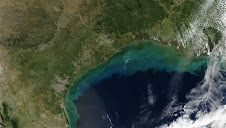
Barack Obama came to office with a long list of environmental promises from combating global warming to changing nearly all of Bush’s policies. Capitalizing on the popularity of the global warming hypothesis, Obama adopted the opportunistic strategy of Nixon and the elder Bush. In the early days of the Obama administration, he could count on the support of a Democratic majority in Congress and voters still flush with promises of “hope and change”. However, his early successes turned to disappointment and disillusionment. As in the Carter era, economic concerns, in this case fueled by a faltering economic recovery, dominated the voters’ concern. As federal spending increased the national debt, policy decisions drove up the price of gasoline and other goods and services, and the promised “green” jobs failed to materialize, the country began to question the fiscal soundness of the new environmental policies. The Democratic majority Obama needed evaporated with the mid-term elections, and with it, support for cap-and-trade of carbon dioxide. Like Clinton, he found himself with a hostile Congress. With strong support from the corn growers and genetically modified seed producer lobbies, corn-based ethanol production increased two-fold. Scientists estimate that at least half of all corn intended for human consumption is contaminated through cross-pollination with genetically modified strains. The Gulf of Mexico dead zone continues to expand as more farmers convert acreage to industrial corn crops. The nuclear industry lobby won support for additional loan guarantees for construction of five new nuclear plants, but disagreements continue concerning where and how to store the waste. At last count, environmental, business, and community groups have filed over one hundred suits related to environmental and energy policies enacted under the Obama administration. The view from today, October 19, 2012, does not look promising for Obama’s re-election or the continuation of many of his administration’s environmental policies under a new administration.
Internet Links Cited
Duke University. (2009, February 6). To Stimulate Economy, Obama Should Revive Reagan-Era Initiative, Law Professor Says. Retrieved February 14, 2010, from Office of News and Communications; Duke University: http://www.dukenews.duke.edu/2009/02/brown_tip.html
US Department of State. (2010). Stagflation in the 1970s. Retrieved from About.com: Economics: http://economics.about.com/od/useconomichistory/a/stagflation.htm
US Department of State. (2010). Years of Change: The 1960s and 1970s. Retrieved February 14, 2010, from About.com: Economics: http://economics.about.com/od/useconomichistory/a/change.htm
Assignment #2
Commentary on Obama's energy policy:
more corn ethanol, 'clean' coal
Reported in http://www.thesunnews.com/611/story/1296600.html on February 3, 2010
The Obama administration apparently prefers a sampler plate approach to energy production. President Obama has piled his plate high with alternatives to fossil fuels – most notably corn-based ethanol and nuclear power, while retaining fossil fuels as the main course. To entice Congress to support this agenda, President Obama is serving a large helping of reduced dependence on foreign oil and job creation. However, he fails to address the net cost of these new “green” jobs in terms of higher energy prices, lower wages, and displacement of existing jobs (US Senate Subcommittee on Green Jobs and the New Economy). The Energy Department and Department of Agriculture are offering incentives while the EPA is adding regulations. The Energy Department is supplying “$4 billion in carbon capture and storage, and it expects industry to contribute an additional $7 billion” for research and development of “clean-coal” demonstration sites. The Agriculture Department “proposed a new plan to provide financing for the conversion of biomass, or material made from plants or animals, to energy”. The EPA unveiled a requirement for the use of “36 billion gallons of renewable fuels by 2022, including 21 billion gallons from ‘advanced biofuels’.” No other administration has taken such an eclectic approach to these issues.
The Obama administration’s buffet of energy options are little more than the re-seasoned leftovers of previous administrations. Obama’s plan includes offshore drilling for oil and gas, a policy also supported by Nixon, Reagan, and both the elder and younger Bush. Nuclear power plants and “clean” coal are perennial favorites. Unfortunately, the US has no permanent storage site for nuclear waste and dim prospects for developing any in the near future since the Obama administration removed the Yucca Mountain Nevada site from consideration. “Clean” coal projects are not a new idea. In 1987, the Department of Energy described thirty-seven projects “underway or planned for clean coal demonstration facilities” ( Department of Energy - Timeline '71 - '80); part of George W. Bush’s energy plan drafted by a task force appointed by Vice President Cheney called for “major increases in future energy supplies including…”clean coal” development” (Vig, p 88). However, even if we bury the carbon dioxide emissions from burning coal, coal mining presents serious problems including grave damage to the environment and to human health (Smithsonian.com). Obama rounds out his list of alternative fuels with biofuels, another well-worn option promoted by Carter in the Biomass and Alcohol Fuels Act of 1980 ( Department of Energy - Timeline '71 - '80). Corn-based ethanol, like the other energy proposals Obama favors, has its own set of problems. Although EPA Administrator Lisa P. Jackson contends that, “new scientific studies concluded corn ethanol, when produced with energy-efficient means, could (emphasis added) have 20 percent lower greenhouse gas emissions than gasoline”. Other studies “found corn ethanol resulted in large amounts of greenhouse gases throughout its production and use, especially when land use changes - such as cutting forests, which store carbon dioxide, to make room for corn - were taken into account”. Ms. Jackson did not mention other possible unintended consequences including higher food prices and environmental damage from fertilizers (Oregonlive.com).
Obama’s plan includes new requirements for the energy industry and new spending programs to promote his agenda. His plan also rolled out EPA standards established in 2007 under George W. Bush which require the US “to have 36 billion gallons of renewable fuels by 2022, including 21 billion gallons from ‘advanced biofuels’. Presumably, some funding for this would come from the Department of Agriculture’s plan “to provide financing for the conversion of biomass, or material made from plants or animals, to energy.” The Energy Department plans to spend more than $4 billion on carbon capture and storage research and development; they expect industry to spend an additional $7 billion. This combination of standards, funding, and the expectation of industry investment in research and development of new technologies borrows strategies from every President from Nixon to George W. Bush. A significant part of the Obama administration’s plan continues policies established during the Bush administration through the Energy Policy Act of 2005 and the Energy Independence and Security Act of 2007 (Vig, Appendix 1).
Although the intent of President Obama’s plan is admirable – energy independence, less pollution, and more jobs, it lacks cohesiveness and a logical basis. Climate change is a widely accepted fact. Over the course of Earth’s history, the climate has changed. Many experts support the global warming hypothesis, but a conveniently overlooked body of research at the Woods Hole Oceanographic Research Institution suggests quite strongly that global warming is self-correcting. Global warming devotees might be surprised to learn that according to research finding published by Woods Hole researchers in January 2009, “One of the ‘pumps’ that helps drive the ocean’s global circulation suddenly switched on again last winter for the first time this decade. The finding surprised scientists who had been wondering if global warming was inhibiting the pump and did not foresee any indications that it would turn back on”. This does not mean we should ignore the problems associated with fossil fuels, but it does suggest that the current administration is using the global warming hysteria as a convenient crisis to further a poorly thought out and ultimately unsound agenda. Oil from any source, domestic or foreign, represents a short-term solution. Pushing for more nuclear power plants without first addressing radioactive waste storage is illogical. It is unwise to displace other crops and cultivate virgin land to expand corn acreage, inflict more damage on aquatic ecosystems through increased fertilizer application, and use already strained water resources to produce more corn and process it into ethanol, especially when there are better alternatives such as switch grass (Scientific American, 2008). “Clean coal” is an oxymoron. The time has long passed for political games for political gains. The overall long-term effect of energy production must be addresses beginning with the raw materials and ending with the waste products. President Obama’s plan clearly lacks such a comprehensive approach.
Websites Referenced
http://bond.senate.gov/public/_files/BondGreenJobsReport.pdf
http://www.smithsonianmag.com/specialsections/ecocenter/Mining-the-Mountain.html
http://www.oregonlive.com/environment/index.ssf/2009/09/growing_corn_for_ethanol_boost.html
http://www.whoi.edu/page.do?pid=12455&tid=282&cid=10046
http://www.whoi.edu/page.do?pid=12455&tid=282&cid=54347
http://www.scientificamerican.com/article.cfm?id=grass-makes-better-ethanol-than-corn
24 January 2010
Permeable paving surfaces and non-point source water pollution
Permeable paving surfaces allow water to infiltrate into the ground instead of running off into streams, rivers, and lakes. Consequently, the amount of pollutants entering surface water sources is greatly reduced and aquifers are recharged. In addition, permeable paving reduces the heat island effect and helps prevent flooding.
In 2007, Arizona State University used pervious concrete to pave the parking lot in front of the ASU Art Museum in the Nelson Fine Arts Center. Go to http://asusmart.com/projects/materials/asu-art-museum-visitor-parking-lot for an article and an excellent video. Some other excellent videos and information can be found at http://www.perviouspavement.org/Pervious-Pavement-Demo-Video.html.
In 2007, Arizona State University used pervious concrete to pave the parking lot in front of the ASU Art Museum in the Nelson Fine Arts Center. Go to http://asusmart.com/projects/materials/asu-art-museum-visitor-parking-lot for an article and an excellent video. Some other excellent videos and information can be found at http://www.perviouspavement.org/Pervious-Pavement-Demo-Video.html.
Subscribe to:
Posts (Atom)