http://articles.sfgate.com/2009-06-21/news/17210121_1_navajo-epa-navajo-nation-legacy-of-uranium-mining
From the 1940s to the 1980s, the US appetite for uranium, spurred by the Cold War, led to highly unregulated mining operations on the 27,000 square-mile reservation that is home to nearly 200,000 members of the Navajo tribe. Mining interests and government agencies failed to inform miners and their families of the dangers of exposure to uranium and they did not provide effective protections from these dangers. Children played in contaminated soil and many people used pieces of uranium ore and mill tailings to build their homes.
The US EPA and the Navajo EPA have now committed to assessing 500 structures - homes, sheds, and buildings - near abandoned mines and tailings dumps. They plan to tear down and remove contaminated structures and build new ones. During the demolition and rebuilding, families will stay in hotels at government expense. As of June 2009, the US EPA had "assessed 117 structures and demolished 27 of them. Thirteen have been or will be rebuilt, and the owners of the others received financial settlements."
Contaminated structures are only a small part of the unsavory legacy left by uranium mining. There are over 500 abandoned mines and countless tailing piles on the reservation, essentially accidents waiting to happen. Caps covering abandoned mining sites are deteriorating. Runoff from periodic heavy rains may carry contaminants toward homes. Drinking water supplies may become contaminated.
There is little data in the article to identify this as an environmental justice issue other than that it affects a minority group with few resources. According to the article, "These families, with the resources they have, they would not be able to put up a new home for themselves," said Lillie Lane, a spokeswoman for the Navajo Nation Environmental Protection Agency. This is something of an understatement. The US Census Bureau estimates that approximately 50% of Navajo people on the reservation live in poverty caused by an estimated 30% unemployment rate. These additional data show this to be an environmental justice case.
Potoski and Prakash put forth that both government and private interests have incentives to pursue their own self-interests. In this case, the government seemed to ignore the mining interests lack of proper safety precautions. The mining interests took advantage of the Navajos lack of understanding of the risks and willingness to work under dangerous conditions because of economic necessity. Konisky clearly points out that poor and minority communities bear a disproportionate share of environmental risks because of "differential government of enforcement of environmental laws and regulations." I doubt that uranium mining interests could have done this kind of health and environmental damage in a more affluent and informed locale.

US Water Use

Sandia Laboratories is researching the water-energy nexus.
Off-shore Wind Farm

Click on the map to view a video.
Recently Extinct

Pyrenean Ibex

Golden Toad
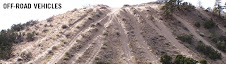
Damage Caused by Off-Road Vehicles
Pickering Knob, WV

Before mining

Pickering Knob after mining
Obama and the Corn Lobby

Dead Zone
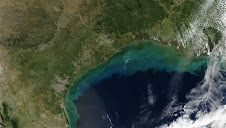
Part of the price of corn-based ethanol

Sources of pollutants that create the Dead Zone
2 comments:
Cases of environmental justice are made exponentially less palatable when paired with the systemic historical degradation of an indigenous populace. In this case there is a rather obvious tie to environmental justice regardless of strict numbers because a minority group is subjected to blatant pollution simply because of the area in which they have been governmentally sanctioned to inhabit. I don't think it is only poverty that makes it environmental justice, but disparate treatment of a singled out group.
I think you are right, Sandra, that the government turned a blind eye to these activities, probably because of the economic value of the mining. I do hope that increased publicity could prompt legislation, especially if the movement is as strong as the Love Canal. People become incensed when they feel like public health is at risk and no action is taken.
This reminds me of the issue with TCE, where the government also seems to want to ignore the hazards of the chemical for its own gain. The government has been slow to consider TCE a carcinogen because many federal sites, specifically military bases, are highly contaminated with TCE. The chemical has been found in wells in Phoenix and Scottsdale. I am not sure what progress has been made in the past couple of years with categorizing TCE.
Post a Comment