http://www.azcentral.com/news/articles/2010/04/23/20100423arizona-immigration-law-passed.html#ab=-&dh=www.azcentral.com&dr=http%3A%2F%2Fwww.drudgereport.com%2F&du=http%3A%2F%2Fwww.azcentral.com%2Fnews%2Farticles%2F2010%2F04%2F23%2F20100423arizona-immigration-law-passed.html&dt=Arizona%20governor%20signs%20immigration%20law;%20foes%20promise%20fight&inst=2&lng=en-us&pc=men&pub=azcentral&ssl=0&sid=4bd2883caeb1e327&srf=0.02&srp=0.2&srx=0&ver=152&xck=0&rev=75818&xd=1
Although it is not strictly an environmental issue, illegal immigration is a sustainability issue. Wheeler (pg. 83) discusses immigration as a "hot-button topic" that must be addressed in relation to population pressures which in turn affect economic, social, and environmental sustainability. The state of Arizona, as well as the other states that share a border with Mexico, face increasing pressures related to illegal immigration. Arizona has now taken action to stem the tide of illegal immigrants crossing the border and the resulting social, environmental, and economic problems accompanying the issue.
Opponents of this legislation view it as a means of discrimination. However, it is a vital part of reducing the damage caused by illegal immigrants. Vast areas of the border region suffer significant environmental impacts from the constant stream of illegal immigrants who leave mountains of trash and damage desert ecosystems. Drug running and human trafficking increase crime and violence not only along the border, but increasingly throughout the border states. Illegal immigrants with little education or job skills have low incomes and, consequently, do not pay significant amounts of taxes, if any. In fact, recent calculations by the IRS show that a family of four with an income of $55,000 would receive a refund of all of the federal income taxes they paid plus about $38 through various programs such as the Earned Income Credit and standard deductions. In addition, children born in the US to illegal immigrants qualify for services and direct support at taxpayer expense. Because immigrants tend to have more children, this increases the pressure on schools and services for low income residents.
Traditionally, immigration has been a federal issue. However, federal enforcement has fallen short leaving states to pay the social and economic costs of large numbers of poorly educated, non-English speaking illegal immigrants. These costs include education, medical care, social services, crime, and poverty. This legislation empowers local law enforcement agencies to ask for documentation of suspects' immigration status and make arrests of those who are here illegally. It also sets penalties including jail time and fines. Although this is a state law, it addresses the illegal immigration problem at a county and municipal level as well.
Because of the failures of the federal government to fully address the illegal immigration issue and all of its related problems, state governments are finding it necessary to act on behalf of their residents. Ideally, the federal government would take strong enough actions to close the border to illegal immigration and assist states with the impacts of illegal immigrants currently in the country.
The problems associated with enforcement of illegal immigration laws at the federal level include lack of political will and the sheer logistics of monitoring the US-Mexico border. In addition, pressure from the Mexican government can influence the federal government's attitude toward border enforcement. It is in the best interest of Mexico for the US to allow free movement of Mexican citizens across the border. When Mexican citizens travel to the US to work, they tend to send much of their income back to Mexico. They also reduce pressure on Mexico's economic resources when they receive medical care and education at US taxpayer expense.
Much of the economic and social pressures associated with illegal immigration is borne by state and local government. This creates a greater incentive for these levels of government to develop policies that reduce illegal immigration. I believe that a coordinated effort at the federal, state, and local level is essential to solving the illegal immigration problem. The federal government must stop illegal immigration at the border and work with Mexico to alleviate the circumstances that foster illegal immigration. State and local governments must develop policies that make immigrating illegally unpalatable for immigrants. In addition, all levels of government need to work together to develop immigration and guest worker programs that create opportunities for immigrants and temporary workers with needed skills to enter the US legally.

US Water Use

Sandia Laboratories is researching the water-energy nexus.
Off-shore Wind Farm

Click on the map to view a video.
Recently Extinct

Pyrenean Ibex

Golden Toad
Damage Caused by Off-Road Vehicles

Pickering Knob, WV

Before mining

Pickering Knob after mining
Obama and the Corn Lobby

Dead Zone
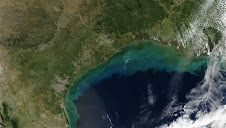
Part of the price of corn-based ethanol

Sources of pollutants that create the Dead Zone
2 comments:
Nice post Sandra. The move by the governor of Arizona seems a bit self serving. The illegal immigrants, though present in the United States illegally do contribute in many ways to the culture and the economy. Granted, rules need to be adhered to, unless a better way (as opposed to this bill) is developed, it will end up being an us versus them situation.
You mentioned in the end, "In addition, all levels of government need to work together to develop immigration and guest worker programs that create opportunities for immigrants and temporary workers with needed skills to enter the US legally." Do you have any recommendations on how Arizona or any other state can go about developing such a program?
Hi, Sandra.
Thank you for sharing your thoughts regarding sustainability and immigration issue in the United States. I am very interested in immigration policy as one of my academic interests, but I didn't know how the inflow of immigrants (especially illegal immigrants) negatively influences environment and sustainability in American context. Your thougts and analysis on these topices are thougtful and creative. I really enjoy your thoughts and analysis. To clarify your thoughts, I have some comments on your thoughts.
First, as you mentioned in your assignment, immigration policy is one of the highly polarized and complicated issues about which the federal and state governments hard to find reach some consensus and take quick policy responses and policy actions. There are several poliucy actors regarding immigration policy, political parties, citizens, legislature, mass media, and interest groups, but they intend to have two fundamentally different perspectives on immigrants and immigration policy. One is pro-immigration perspective, focusing on the immigrants' social and economic contribution in the United States while the other is anti-immigration perspective which considers immigrants as "a risky enemy" or "the plunderer ot econimc pie" in the United States. They have very differnt perspecctives on the roles and identities of immigrants and immigration policy so under this circumstance, immigration is a wicked issue which is hard to find relevant policy soultions.
Under the lack of federal leadership on comprehensive federal reform efforts, state governments have intensified their voices and attempted to change and shape immigration policy with differnt angles. As you mentioned, it is very important to make a coordinated effort at the federal, state, and local level on immigration policy, but the most important things is "how" questions: how each government makes a coordinated effort and interaction to solve a very complicated immigration issues with differnt ideologies, belief systems, roles, and (negative or positive) impacts on American society and economy.
Thank you for your interesting analysis on immigration policy and sustainability in the United States.
Post a Comment