Contingent valuation is most effective in cases where the respondents are asked to state their preferences using closed-ended questions that address real situations instead of open-ended questions that address hypothetical situations. (“Would you be willing to pay $X to accomplish Y?” vs. “How much would you be willing to pay to accomplish Y?”) It is also more useful in situations that affect the respondents directly.
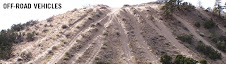
An example of a local environmental problem to for which contingent valuation would be useful is the damage caused by off-road vehicles. Off-road vehicles damage large areas of Arizona desert each year leading to habitat loss and severe erosion. Current enforcement is inadequate to curb off-roading in undesignated areas. Additional enforcement would require additional funding. Contingent valuation could assess the public’s willingness to pay for this funding and the sources of funding they would support.
Alternative energy sources such as wind and solar power are currently more expensive than traditional power sources such as coal, natural gas, and nuclear power. However, wind and solar power are non-polluting and essentially inexhaustible, and once developed, potentially far less expensive than current power sources. Contingent evaluation would assess the public’s support for wind and solar alternatives quite effectively by determining their willingness to pay more in energy costs temporarily in exchange for the environmental and future economic benefits. In addition, issues such as the “visual pollution” associated with wind and solar installations could be evaluated using contingent valuation. For example, installations near population centers may be less expensive to build and involve shorter transmission distances. However, installations in more remote locations are less visible, thus present less intrusion on the public’s scenic view. Conversely, a more remote location as opposed to rooftop installations might reduce the scenic value of a favorite place for some. The public could decide which alternative made the most sense to them based on their preferences and the relative costs involved.
Improving air quality is another issue that lends itself to contingent valuation, especially on a local level. In the Phoenix metropolitan area, air quality is an on-going problem exacerbated by a desert environment, urban sprawl, and a car-dependent population. Attempts to limit urban sprawl and decrease the number of cars on the roadways have met with limited success because of public resistance to the measures proposed by policy-makers. Contingent valuation studies could provide more insight into which measures the public would support and at what cost. This approach would also serve to inform the public of the economic, environmental, and social costs and benefits of various proposals.
28 February 2010

Subscribe to:
Post Comments (Atom)





No comments:
Post a Comment