The realities of forty-two years of US environmental policy
Analyzing an administration’s environmental policy in the US may appear to be as simple as examining each administration’s record and declaring them “green” or “not green”. In reality, politicians are subject to public sentiment, economic realities, political agendas of the other politicians, and the views of the courts. In this look back at the past 42 years of US environmental policy, I have tried to consider these factors.
Spurred by Rachel Carson’s Silent Spring (1962) and the first Earth Day in 1970, Americans demanded “more vigorous and comprehensive federal action to prevent environmental degradation” (Kraft & Vig, p. 11). The political appeal these concerns motivated policymakers to enact new environmental regulations and laws without regard for agencies’ ability to carry them out or their overall effects on the environment and the economy. President Nixon signed the National Environmental Policy Act (NEPA) and proclaimed the 1970s the “environmental decade”, furthering this flurry of new policymaking. Throughout the 1970s, the primary focus remained on pollution, pesticides, endangered species, and habitat protection.
Spending to fund the Vietnam War and Linden Johnson’s “war on poverty” and a reluctance to raise taxes increased inflation by 1970. The OPEC oil embargo (1973 – 1974) created shortages and increased energy prices (US Department of State, 2010). By the end of the “environmental decade”, the US economy was in a deep recession. Energy prices, climbing unemployment, and stagflation overshadowed environmental concerns (US Department of State, 2010). Nonetheless, the Carter administration was successful passing amendments to the Clean Air and the Clean Water Acts, the Surface Mining Control and Reclamation Act, the Public Utility Regulatory Policies Act, the Alaska National Interest Lands Conservation Act, and the Comprehensive Environmental Response, Compensation, and Liability Act (CERCLA).
In 1980, recession weary voters elected Ronald Reagan on promises of smaller government and reduced taxes. Reagan’s Economic Recovery Act, “reduced income taxes by nearly 25 percent and deeply cut spending for environmental and social programs” (Vig, p. 79) and “ not only reduced tax rates, but established a powerful set of incentives to promote investment in income-producing ‘capital assets’”; by 1983 the economy had recovered (Duke University, 2009). The Reagan administration’s focus on reducing the influence and size of the federal government created conflicts with Congress. Faced with a Congress dominated by members who had enacted much of the environmental policies from the previous decade, President Reagan resorted to an “administrative presidency” (Vig, p. 79).
Reagan, like all other Presidents, appointed people who shared his views. He reduced funding for environmental programs and increased White House oversight of EPA and other regulations by creating the Office of Information and Regulatory Affairs (OIRA). The Council on Environmental Quality (CEQ) and the EPA suffered substantial budget and staffing cuts. This raised Congressional criticism, which led to an investigation of OIRA, eventually forcing James Watt and Anne Burford to resign as head of the Interior Department and the EPA, respectively.
By 1984, environmental issues were popular again. Congress “approved major amendments to the 1976 Resource Conservation and Recovery Act … and set tight new deadlines for EPA rulemaking on control of hazardous chemical wastes (Vig, p. 107) and passed the Food Security Act, reauthorization of the Clean Water Act, the Superfund Amendments and Reauthorization Act, the Clean Water Act Amendments, and the Ocean Dumping Act (Vig, Appendix 1). The Reagan administration formally recognized climate change as an environmental issue with the passage of the Global Climate Protection Act.
A nation’s energy policies affect the environment and the economy (which in turn affects public sentiment and government policy on the environment). Reagan pursued US energy independence through deregulation of oil and natural gas production, increasing the Strategic Petroleum Reserve, and support of nuclear power and clean-coal technology. Congress enacted the first comprehensive nuclear waste legislation, the Nuclear Waste Policy Act of 1982 and in 1987, approved Yucca Mountain, Nevada for consideration as a high-level nuclear waste storage site (Vig, Appendix 1).
George H.W. Bush inherited a strong economy and an electorate keen on environmental issues. He worked with environmental leaders and Democratic Congress to strengthen environmental protections such as the Clean Air Act Amendments to reduce sulfur dioxide emission from coal-fired power plants and lower toxic airborne chemical emissions. He promoted a cap-and-trade scheme to reach the sulfur dioxide emission goals instead of command-and-control regulation. Although he promised to be an “environmental president”, he disappointed many with his refusal to agree to binding carbon dioxide reduction targets at the 1992 Earth Summit and his refusal to sign the Convention on Biological Diversity.
The Clinton administration offered many environmental policy promises, but ignored the relationship between environmental policy and the economy. President Clinton appointments were largely pro-environment, most notably Bruce Babbitt, Secretary of the Interior. Babbitt attempted to raise grazing fees on public lands eliciting outrage from ranchers and their Congressional representatives. Vice President Gore proposed a tax on the energy content of fuels (the BTU tax), which provoked a similar reaction in Congress. The administration dropped both proposals. Two other policies favored by Clinton, the biodiversity convention and stabilization of carbon dioxide emissions by 2000, also failed. Faced with Republican control of both the House and the Senate, Clinton employed Reagan’s tactic of an “administrative presidency”, a move that allowed the administration to strengthen the EPA, adding some fifty new programs. Clinton, through executive orders, protected over 60 million acres of public land, more than did any president besides Theodore Roosevelt. One issue Clinton failed to address because of opposition from Congress was climate change (Vig, pp. 82 – 84).
President George W. Bush attempted to circumvent environmental policy in favor of an antiregulatory, pro-business agenda (Kraft, p. 111). Bush required numerous formal regulatory review procedures, which slowed or reversed regulations. Policy implementation was further hindered because the “vice president and White House operatives often intervened directly in the details of agency decision making” (Vig, p. 87). Faced with Democratic majorities in both the House and the Senate, the Bush administration resorted to executive rulemaking that bypassed Congress. This tactic opened the door to legal challenges. Many people criticize Bush’s opposition to stricter regulation of carbon dioxide emissions and instead promoting further research on global warming. However, he promoted increased domestic oil production, alternative fuels, and increased fuel efficiency standards to reduce dependence on foreign oil.
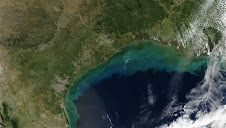
Barack Obama came to office with a long list of environmental promises from combating global warming to changing nearly all of Bush’s policies. Capitalizing on the popularity of the global warming hypothesis, Obama adopted the opportunistic strategy of Nixon and the elder Bush. In the early days of the Obama administration, he could count on the support of a Democratic majority in Congress and voters still flush with promises of “hope and change”. However, his early successes turned to disappointment and disillusionment. As in the Carter era, economic concerns, in this case fueled by a faltering economic recovery, dominated the voters’ concern. As federal spending increased the national debt, policy decisions drove up the price of gasoline and other goods and services, and the promised “green” jobs failed to materialize, the country began to question the fiscal soundness of the new environmental policies. The Democratic majority Obama needed evaporated with the mid-term elections, and with it, support for cap-and-trade of carbon dioxide. Like Clinton, he found himself with a hostile Congress. With strong support from the corn growers and genetically modified seed producer lobbies, corn-based ethanol production increased two-fold. Scientists estimate that at least half of all corn intended for human consumption is contaminated through cross-pollination with genetically modified strains. The Gulf of Mexico dead zone continues to expand as more farmers convert acreage to industrial corn crops. The nuclear industry lobby won support for additional loan guarantees for construction of five new nuclear plants, but disagreements continue concerning where and how to store the waste. At last count, environmental, business, and community groups have filed over one hundred suits related to environmental and energy policies enacted under the Obama administration. The view from today, October 19, 2012, does not look promising for Obama’s re-election or the continuation of many of his administration’s environmental policies under a new administration.
Internet Links Cited
Duke University. (2009, February 6). To Stimulate Economy, Obama Should Revive Reagan-Era Initiative, Law Professor Says. Retrieved February 14, 2010, from Office of News and Communications; Duke University: http://www.dukenews.duke.edu/2009/02/brown_tip.html
US Department of State. (2010). Stagflation in the 1970s. Retrieved from About.com: Economics: http://economics.about.com/od/useconomichistory/a/stagflation.htm
US Department of State. (2010). Years of Change: The 1960s and 1970s. Retrieved February 14, 2010, from About.com: Economics: http://economics.about.com/od/useconomichistory/a/change.htm






No comments:
Post a Comment